3 years
Connecticut: unclaimed bank money and where to complain
A Connecticut demand or savings account left alone for three years is presumed abandoned and goes to the State Treasurer, who holds the money for you. Here is how to look, and where to take a complaint about a bank or credit union.
By HonestRudder Editorial Team Updated 4 min read
- Dormancy for checking and savings
- 3 years
- Who holds the money
- The State Treasurer
- Search cost
- Free, per the Treasurer
In short
In Connecticut, a demand or savings deposit with no owner activity for three years is presumed abandoned, and the bank reports it to the State Treasurer. The money stays claimable: search at ctbiglist.gov. Complaints about a state-chartered bank or credit union go to the Department of Banking. Federally chartered banks answer to the OCC, and federal credit unions to the NCUA.
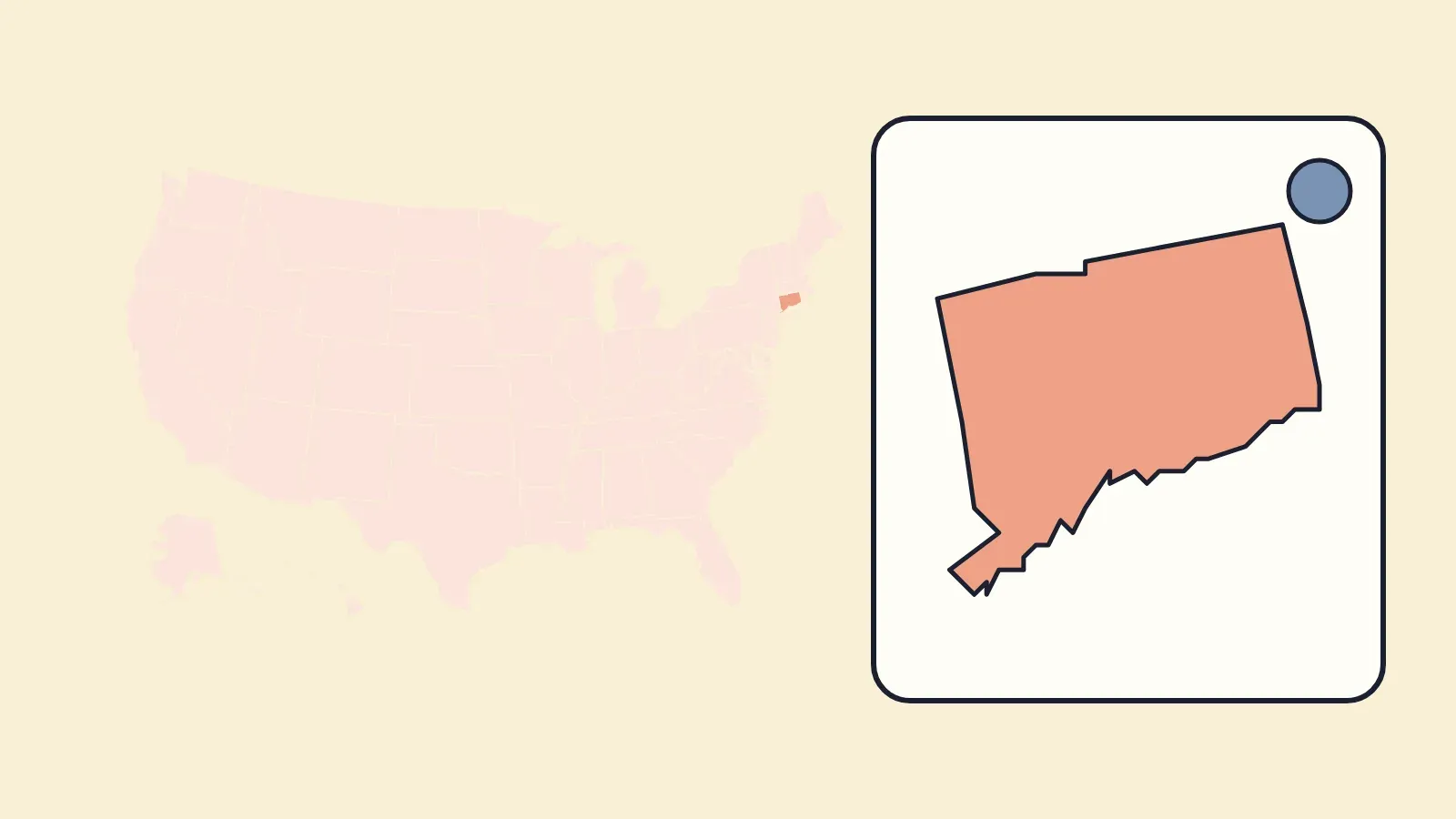
Connecticut at a glance
How money from a dormant account reaches the state
Connecticut's unclaimed property provisions are in Chapter 32 of the General Statutes. Under Section 3-57a, a demand or savings deposit held by a banking or financial organization is presumed abandoned unless, within three years, the owner increased or decreased the deposit, corresponded in writing with the bank about it, or otherwise showed interest, as shown by a memorandum on file or by an IRS Form 1099 from the bank that the Postal Service did not return. A deposit is also not presumed abandoned if an officer of the bank knows the owner is living. The Office of Legislative Research's 2025 summary of the law adds that most matured time deposits made in the state also run three years, and safe deposit boxes five years after the rental period ends. The National Association of State Treasurers' page for Connecticut lists three years for checking, savings and certificates of deposit.
Before a presumption takes effect, Section 3-65a requires the holder to send notice to the owner by mail, and by email if the owner agreed to it. A 2025 law, Public Act 25-81, amended those notice rules, among other changes, according to the Office of Legislative Research report of September 4, 2025. The dormancy period for bank deposits was not among the changes that report describes.
Finding and claiming your money
- Search by name. Go to ctbiglist.gov and search each name you have used, including a maiden name and any business name. The Treasurer's page says searching the site is free.
- Check the record. Match the holder, the last address and the amount against what you remember. Old addresses are common.
- Start the claim. Follow the instructions on ctbiglist.gov for the property you found. If the owner has died, expect to be asked for proof of your relationship.
- Ask for help by phone. The Treasurer's unclaimed property line is 800-833-7318, Monday through Friday, 8:30 a.m. to 5 p.m. Eastern.
The Treasurer pages used for this page do not say whether claiming costs anything, and do not warn about paid finders, so confirm any fee on the official site before you pay anyone. You can also search nationally at missingmoney.com, a tool from the National Association of Unclaimed Property Administrators, but the claim goes through the state that holds the property.
Who handles bank and credit union complaints
The Connecticut Department of Banking describes itself as the primary state regulator for securities, consumer credit and state-chartered banks and credit unions. You file through its online Consumer Assistance Form. Its page says the Department only accepts complaints about entities it regulates, and that it forwards your complaint to the institution and works to get a response. For a federally chartered bank, the page points to the Office of the Comptroller of the Currency (helpwithmybank.gov), and for a federal credit union to the National Credit Union Administration (mycreditunion.gov). Your account agreement or the institution's website says which it is.
The Attorney General's Consumer Assistance Unit takes consumer complaints online or at 860-808-5420. The office says it represents the public interest, not individuals, and cannot provide legal advice. It may offer informal mediation and may refer a complaint to another agency. Complaints may be subject to public disclosure. If a deadline matters, ask a lawyer or legal aid. For the federal route, see how to file a complaint with the CFPB and your state.
State-chartered bank or credit union
Connecticut Department of Banking, online Consumer Assistance Form.
Federal charter
OCC for national banks, NCUA for federal credit unions.
Business or practice
Attorney General, Consumer Assistance Unit, 860-808-5420.
What this means in practice
- Make one deposit, withdrawal or written contact on every account each year, and keep the bank's reply.
- Update your address with every bank. Many accounts turn up as unclaimed because mail came back.
- A fee that drains a dormant account to zero is a reason to close the account properly. See closing a bank account.
- To check whether a deposit is insured at a bank, see FDIC and NCUA deposit insurance.
Common questions
How long before a Connecticut bank account counts as abandoned?
Three years without owner activity for a demand or savings deposit, under Section 3-57a of the Connecticut General Statutes.
Where do I search for money Connecticut is holding?
ctbiglist.gov, run by the Connecticut Office of the Treasurer. The Treasurer's page says searching is free, and the phone line is 800-833-7318.
Who do I complain to about a Connecticut credit union?
If it is state-chartered, the Connecticut Department of Banking. If it is a federal credit union, the National Credit Union Administration.
Sources
- Connecticut General Statutes, Chapter 32 (Treasurer; unclaimed property, §§ 3-56a to 3-74a)
- Connecticut Office of Legislative Research, Report 2025-R-0127 (unclaimed property)
- Connecticut Office of the Treasurer, Unclaimed Property Overview
- NAUPA (National Association of State Treasurers), Connecticut dormancy periods
- Connecticut Department of Banking, Consumer Assistance
- Connecticut Office of the Attorney General, Contact
Facts on this page were checked against these sources on November 21, 2026. The statute text comes from the 2025 edition of the General Statutes and may not show Public Act 25-81 in full, so check the current text. Phone numbers and complaint procedures change; use the agency's own page before you send anything.
Related reading
-
Account guide
Closing a bank account
How to close an account cleanly: new account first, direct deposits moved, autopays stopped and pending items cleared.
-

Rights guide
How to file a complaint
Which agency takes a bank or credit union complaint, how the CFPB process works and what to expect.
-

Account guide
FDIC and NCUA deposit insurance
What the $250,000 limit covers, how ownership categories add up and how to check that an institution is insured.