ACH
ACH transfers explained: how money moves between accounts
Direct deposit, rent drafts, utility bills and many transfers between your own accounts travel over the ACH network. Here is what it is, how long it takes, and which rules protect you.
By HonestRudder Editorial Team Updated 5 min read
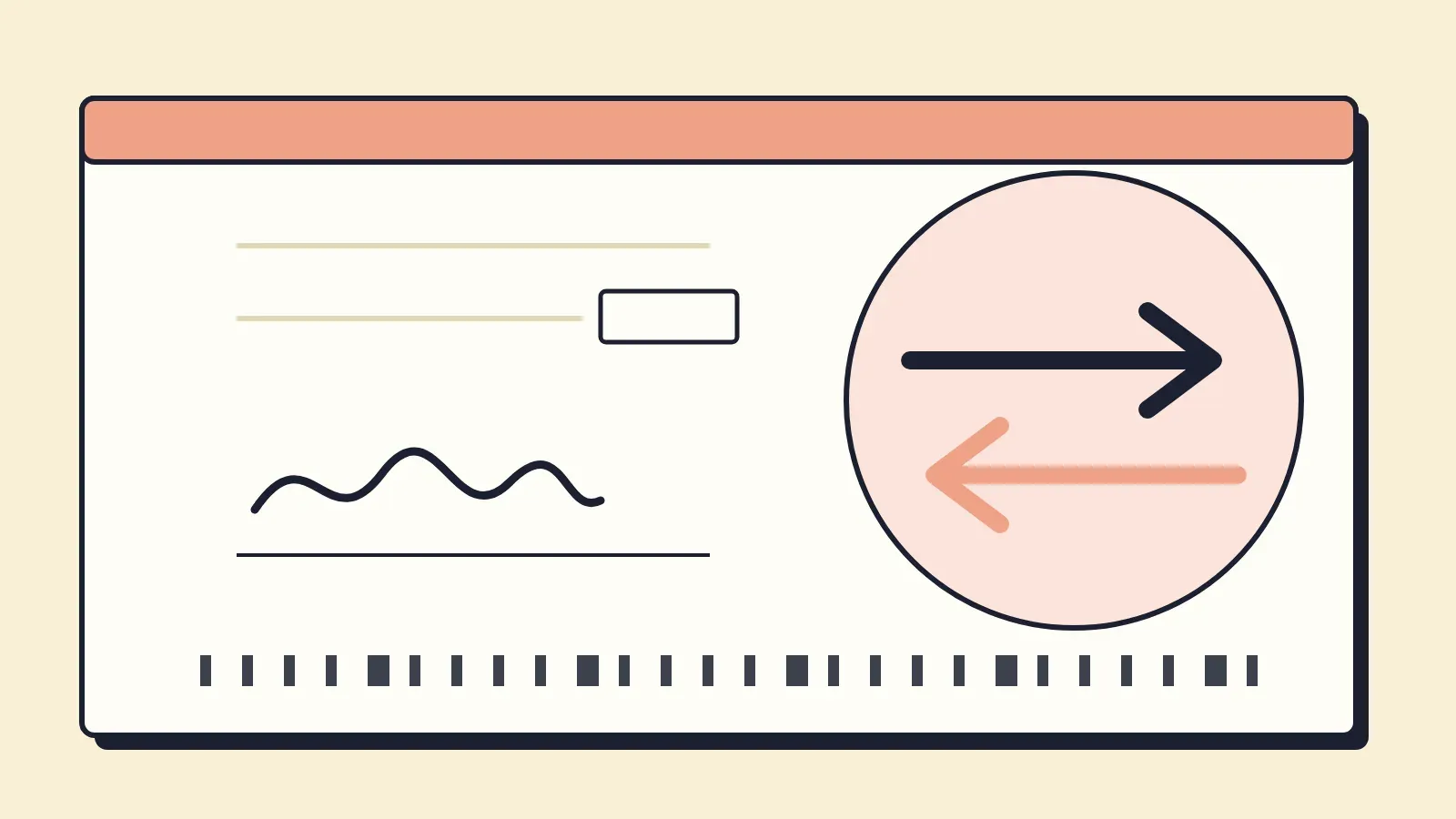
- Credit payment
- Sender pushes money
- Debit payment
- Receiver pulls money
- Does not settle
- Weekends, federal holidays
- Deposit availability
- Next business day
In short
The ACH network is the system behind direct deposit, many bill payments and many transfers between accounts. Nacha, which publishes the network's operating rules, says ACH payments can be credits (money sent to an account) or debits (money pulled from one). Payments can be processed the same business day or scheduled for the next day, and credits can take up to two business days if the sender chooses. Under Regulation CC, an electronic payment must be available to the receiver by the next business day after the bank receives it.
What ACH is
ACH stands for Automated Clearing House. Nacha, which publishes the network's operating rules, calls the ACH Network the backbone of the U.S. financial system. It says the Federal Reserve and The Clearing House act as the two operators of the network, and that ACH is used for direct deposit of salaries and wages, bill payments such as mortgages and utilities, scheduled and recurring payments between known parties, business-to-business payments, account transfers, and the delivery of tax refunds and Social Security payments.
Nothing physical moves. An ACH payment is an electronic instruction that passes through the network's operators, who exchange payments with each other several times a day, according to Nacha. You supply a routing number and an account number, and the banks do the rest.
| Type | Who starts it | Everyday examples |
|---|---|---|
| ACH credit | The sender pushes money to your account | Direct deposit of pay, a tax refund, a transfer between accounts |
| ACH debit | The receiver pulls money from your account | A utility bill or a mortgage payment that is set up to be paid automatically |
The CFPB describes automatic debit this way: you give a merchant or service provider your checking account information, and they withdraw funds on each due date. See autopay and stopping recurring charges for how to end one.
How long an ACH payment takes
ACH is not one speed. Nacha says payments can be processed the same business day or scheduled for the next day, and credits can take up to two business days if the sender chooses. The network settles several times each banking day through the Federal Reserve's settlement service, so payments do not settle on weekends or federal holidays. A transfer you start on a Friday evening may not move until the next business day.
Once the receiving bank has the money, Regulation CC applies. An electronic payment, which includes an ACH credit, must be available for withdrawal by the business day after the bank receives it, and the payment counts as received only when the bank has both collected the funds and the account and amount information (12 CFR 229.10(b)). Direct deposits and wires follow this rule. A bank may release a direct deposit sooner, but not later.
Same Day ACH
Same Day ACH launched in 2016, and it now handles both credits and debits. The Federal Reserve Banks describe three processing windows each business day. Settlement is reflected at 1:00 p.m., 5:00 p.m. and 6:00 p.m. Eastern time, with submission deadlines of 10:30 a.m., 2:45 p.m. and 4:45 p.m. Eastern. An entry submitted after the last deadline does not settle that day.
The per-payment limit is $1 million, in effect since March 18, 2022, according to Nacha. Nacha's rule summary states that the limit will increase to $10 million with an effective date of September 17, 2027. Until then, an item over $1 million gets next-business-day settlement, even though other items in the same batch may settle that day.
Whether you can use Same Day ACH, and at what cost, is up to your bank or the company sending the payment, so ask before you count on it.
Your rights if something goes wrong
Regulation E, the CFPB's rule for electronic fund transfers, sets the error-resolution steps in 12 CFR 1005.11. Tell your bank within 60 days after it sends the statement that first shows the error. The bank must determine whether an error occurred within 10 business days. If it needs longer, it may take up to 45 days, but it must first provisionally credit your account. For transfers within 30 days of the account's first deposit, point-of-sale debit transactions and transfers started outside the United States and its territories, the outer limit is 90 days instead of 45. The bank must report the results within three business days of finishing, and correct a confirmed error within one business day.
The same rule makes an unauthorized electronic fund transfer an error you can report, and the CFPB's commentary refers to ACH transaction records when a bank investigates. How fast you report matters for the amount you can lose. The loss limits are in 12 CFR 1005.6 and are covered in unauthorized debit and ACH transactions. The dispute clock tool counts the days from a statement date.
- Look at every statement. The 60 days run from the date the bank sends the statement, not from the date you notice.
- Report in writing as well as by phone. Keep copies and note the date, the amount and the name on the debit.
- Ask the bank, then the regulator. If the bank does not resolve it, you can complain to the CFPB at consumerfinance.gov/complaint.
What changed in 2026
Nacha has phased in fraud-monitoring rules for the ACH network. Phase 1 took effect on March 20, 2026, and covered fraud monitoring by banks that send ACH payments, by large originators and their service providers, and ACH credit monitoring by large receiving banks. Phase 2 took effect on June 22, 2026, and extended the monitoring to all other originators and service providers and to all other receiving banks. These are Nacha rules for banks and businesses that use the network. Nacha's summary has no statement about what they mean for consumers.
For you, the practical points are the same as before: confirm who you are paying before you send a transfer, do not give your account number to someone you cannot verify, and read the first statement after you set up an automatic payment. For a different way to send money, see wire transfers explained.
Common questions
How long does an ACH transfer take?
It depends on how it is sent. Nacha says payments can be processed the same business day or scheduled for the next day, and credits can take up to two business days if the sender chooses. Nothing settles on weekends or federal holidays.
Is Same Day ACH available to everyone?
It exists on the network, but the bank or company that sends the payment has to use it. The Federal Reserve Banks list three same-day windows with settlement at 1:00 p.m., 5:00 p.m. and 6:00 p.m. Eastern.
How soon must a bank make a direct deposit available?
Under 12 CFR 229.10(b), by the business day after it receives the payment, counted from when the bank has the collected funds and the account and amount information.
What can I do about an ACH debit I did not authorize?
Tell your bank within 60 days after it sends the statement showing the debit. Regulation E (12 CFR 1005.11) then requires the bank to investigate, and to credit your account provisionally if it cannot finish within 10 business days.
Sources
- Nacha, ACH payments fact sheet
- Federal Reserve Financial Services, Same Day ACH frequently asked questions
- Nacha, Summary of upcoming rule changes
- eCFR, 12 CFR 229.10, Next-day availability
- CFPB, Regulation E, 12 CFR 1005.11 (procedures for resolving errors)
Facts on this page were checked against these sources on November 21, 2026. Same Day ACH deadlines and limits are set by the network and can change, and your bank sets its own cutoffs and fees, so confirm both with your institution.
Related reading
-
Payments guide
Wire transfers explained
Why a sent wire is hard to undo, what international wire rights exist and how to avoid wiring to a scammer.
-
Payments guide
Autopay and stopping recurring charges
How to revoke permission, the three-business-day stop-payment rule and what to do if a charge still hits.
-
Rights guide
Unauthorized debit and ACH transactions
The $50, $500 and 60-day tiers of Regulation E, and the schedule the bank has to follow once you report.